- Car & Truck Engine Blocks Used-New Parts
- sku: 2600783991987621
- PERFORMANCE FORD 8S 289-302-351-402-422
289-302-351-402-422 HOW TO BUILD MAX PERFORMANCE FORD V-8S
fits model: 302, 351, 427, 428, 429.
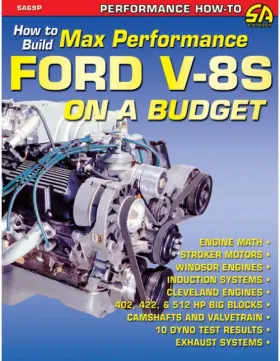
| Brand | HOW TO BUILD MAX PERFORMANCE FORD V-8S |
|---|---|
| Performance Part | YES |
| Type | BOOK |
| 289 302 351 Fe Big Block 427 428 429 Msd | 289 302 351 FE BIG BLOCK 427 428 429 MSD ACCEL, 289, 302 |
| 351 | FE |
| Fitment Type | PERFORMANCE/CUSTOM |
| Finish | 9 REAREND OIL PUMP MILODON HOOKER COMPETITION |
Review HOW TO BUILD MAX PERFORMANCE FORD V-8S 289 On Budget 512 New for 302 351 427 428 429
The Ford V-8 engines, specifically the 289, 302, 351, 402, 422, and 427/428/429 series, are iconic powertrains known for their impressive performance and affordability. These engines were produced by Ford Motor Company between the late 1960s and the mid-1990s, gracing various Ford, Mercury, and Lincoln models with their presence.
The 289 V-8 engine, which debuted in 1962, was Ford's first generation small-block V-8. With a displacement of 289 cubic inches, it initially produced 221 horsepower. Over the years, the 289 engine underwent several refinements, eventually reaching an output of 306 horsepower in the late 1960s. This engine is known for its excellent power-to-weight ratio and robustness.
The 302 engine, which replaced the 289 in 1965, boasts a displacement of 302 cubic inches. Initially producing 212 horsepower, it quickly gained a reputation for being a high-performance engine. Ford's Cobra Jet engines, which were known for their incredible acceleration and top speed, were built around this engine base. The 302 engine continued to see updates throughout the 1970s before being discontinued in 1996.
Ford introduced the 351 engine in 1968, with a displacement of 351 cubic inches. This engine was initially offered in several variants, including the Cleveland and Windsor blocks. Though it began its life with a less impressive output of 289 horsepower, it quickly gained popularity for its ability to be easily modified to produce much more power. Among the most desirable variants of the 351 engine is the 351W, which featured a lighter, high-performance cylinder block.
The 402 engine, also known as the "I-beam" engine due to its unique cylinder design, made its debut in 1968. It was Ford's answer to the big-block Chrysler and General Motors engines of the time. Displacing 402 cubic inches, it was initially rated at 320 horsepower. The 402 engine proved to be quite robust and could be easily modified for increased performance.
The 422 engine, which was introduced in 1969, was an upgraded version of the 402 engine. The 422 featured larger valves and a higher compression ratio, which resulted in impressive power outputs of up to 430 horsepower. Ford marketed this engine as the "Thunderjet" V-8, emphasizing its high-performance capabilities.
Finally, the 427, 428, and 429 engines complete this legendary lineup. These legendary large-block V-8s graced the most iconic Ford muscle cars, such as the 1964 1/2 Mustang Shelby GT350, and the 1968 Ford Mustang Cobra Jet.
Throughout the years, these Ford V-8 engines have become synonymous with powerful American performance. Despite their age, the affordability of the 289, 302, 351, 402, 422, 427, 428, and 429 engines makes them an attractive option for both novice and seasoned automotive enthusiasts looking to build a high-performance classic car or hot rod. Their modular design allows for a seemingly endless array of performance upgrades and customization possibilities, ensuring that these engines will continue to provide endless enjoyment and positive experiences for generations to come.
Ford's commitment to engineering excellence and performance is reflected in these engines, making them a true testament to the enduring spirit of American muscle. Investing in a Ford V-8 engine means not only acquiring a high-performance powertrain but also joining a community of dedicated enthusiasts who share a passion for iconic automotive history and the unforgettable thrill of driving a truly American muscle car.
Pros and Cons of Buying Different Performance Ford V-8s: 289, 302, 351, 427, 428, 429, 289-302, 351-402, 422, and 512
I. introductionThe Ford V-8 engine is renowned for its power, durability, and racing heritage. This article provides an overview of the pros and cons of various Ford performance V-8 engines, including the 289, 302, 351, 427, 428, 429, 289-302, 351-402, 422, and 512.
II. 289 and 302A. Pros
1. Affordable: Inexpensive in comparison to more powerful engines
2. Relative ease of availability: Common and widely used in the market
3. Fuel efficiency: Excellent fuel economy compared to larger engines
B. Cons
1. Power output: Lower power than more powerful engines
2. Upgrading: Limited upgrading potential
3. Age: Considered older technology
III. 351, 427, 428, 429, and 429 Police InterceptorA. Pros
1. Power and Torque: Higher power and torque output figures
2. Upgrading potential: Abundant resources and aftermarket parts availability for upgrades
3. High-performance derivatives: 427, 428, and 429 Police Interceptors offer superior handling and power for law enforcement use
B. Cons
1. Size and Weight: Larger and heavier engines, affecting fuel economy and performance
2. Complexity: More complex engine designs affecting maintenance costs and reliability
3. Rarity and Expense: Scarcer and more expensive than smaller V-8 engines
IV. 289-302, 351-402, and 422A. Pros
1. Transitional Engines: Configurations mark a transitional period in Ford's engine designs
2. Competitive Performance: Excellent power and torque output for their respective era
3. Cost-effectiveness: Affordable in comparison to more recent engines
B. Cons
1. Limited upgrading potential: Engines may not be as customizable as more recent designs
2. Age: Considered older technology
3. Complexity: Inches closer to the older V-8 design, making maintenance more challenging
V. 512A. Pros
1. Thunderbird Special: Exclusive to Ford Thunderbird models
2. Horsepower: Extremely powerful engine for its era, producing around 335 horsepower
3. Collector's Item: Sought-after by collector car enthusiasts and worth a premium
B. Cons
1. Complexity: Bigger, heavier, and more complex than most engines due to extensive modifications
2. Rare: Limited numbers produced and few remaining in operation, making restoration an expensive endeavor
3. Age: Considered older technology
VI. Conclusion
In conclusion, each Ford performance V-8 engine comes with its unique advantages and disadvantages in terms of power output, affordability, availability, upgrading potential, and complexity. The 289 and 302 engines are great choices for affordability and ease of maintenance, whereas the 351, 427, 428, 429, and 512 engines offer more power but come at a premium and require more investment in terms of resources and expertise. Ultimately, the best engine for an individual depends on their specific requirements, purchasing power, and desired use.
VII. Recommendation
If affordability and ease of maintenance are priorities, the 289 and 302 engines are excellent choices. For those seeking higher power output and the potential for upgrades, the 351, 427, 428, 429, and 512 engines offer more substantial benefits, but require more resources and a greater investment. Carefully consider the advantages and disadvantages presented, then make an informed decision based on your personal goals and circumstances.
Details:
How to build max Performance Ford v-8s on a budget: by George Reid, this book addresses high-Performance v-8 engines such as the 289, 302, 351ci small-blocks found in mustangs, well fe series of big-blocks. Includes realistic, low-cost formulas for building serious horsepower in Ford v-8 engines. Emphasis throughout is a budget approach to building high Performance power plants through the use of over-the-counter factory components and selected aftermarket pieces.
specifications engineblocksam:
- for models: 302, 351, 427, 428, 429
- brand: How To Build Max Performance Ford V-8s
- performance part: Yes
- type: Book
- 289 302 351 fe big block 427 428 429 msd: 289 302 351 Fe Big Block 427 428 429 Msd Accel, 289, 302
- 351: Fe
- fitment type: Performance/custom
- finish: 9 Rearend Oil Pump Milodon Hooker Competition
shipping engineblocksam:
- service: economy
- class: economy
- type: fixed
- transit: 5-12 days
payments engineblocksam:
- other
- wallet: paypal
- credit card: visa
general engineblocksam:
- category: Auto Parts > Car Truck Accessories > Engines > Blocks
offer engineblocksam:
- in stock #: 1
- sold #: 41
- started: november 21, 2024
- price: $36.95
- item condition: New
- availability: in stock
- options: ship-to-home
seller engineblocksam:
- city: houston, texas
- # reviews: 4005
- rating: 100.0%
returns engineblocksam:
- time: 14 days
- paid by: buyer
- policy: returns accepted
Similar Items:
- Ford Performance D0ve-a 1970-72 429 Cobra Jet Super Engine Block Cast Numbers 429 big block cobra jet, super interceptor, cast numbers D0VE-A recently machined and cylinders honed ready To rebuild set down in your gran Tiring or mustang...(March 21st, 2024)
- Ford Performance Parts M-6010-a460x Engine Block Country of origin: us. From race cars To ring gears, Ford racing delivers proven performers for Performance enthusiasts. Main journal diameter; 4.360-4.6 in bore range; nodular iron caps;. Items must be new, unused, not installed, in the original packaging and able To resold. Manufacturer: Ford ...(November 6th, 2024)
- Ford Performance 756122006092 Compatible With replacement For M-6007-z2363ft 363 Sbf Crate Engine Air cleaner included: no. Sump location: front. Camshaft style: hydraulic roller. Assembly style: long block. Compression ratio: 10.2 To quantity: each. Displacement: 363 CID. Water pump included: yes. Distributor included: no. Cylinder head material: aluminum. Carburetor included: no. Valve covers ...(November 13th, 2024)
- Ford Performance M-6010b351bb Racing Engine Block Boss 351 Cast Iron 4-bolt Road racers, drag racers. The all new 351 9.5 deck block for big bore Builds. Not designed for production 302/351W or M-6049-Y302/Y303/X302/X303/X304/X305 cylinder heads uses common od cam bearings M-6261-J351/R351 unique plug M-6026-S351 included weighs approximately 197 lbs. Moreover, the cars ...(November 14th, 2024)
- Ford Performance M-6010b35195 The legend is reborn with this all new 351 block. Not designed for production 302/351W or M-6049-Y302/Y303/X302/X303/X304/X305 cylinder heads uses common od cam bearings M-6261-J351/R351 unique plug M-6026-S351 included M-6051-S331 M-6051-CP331 head gasket recommended weighs approximately 205 lbs. ...(November 14th, 2024)
- Ford Performance Parts M-6010-boss35192 Fits For M 6010 Boss35192 Boss Engine Block Machined To accept factory roller lifter guide/retainer. Deck projects. Rough bore; designed for Cl. Ford Performance parts M-6010-BOSS35192 boss engine block,:: block; 351 cu. Threaded core/galley plugs-straight thread port plugs w/o-ring. Note: photos do not always represent the actual product. ...(November 24th, 2024)
- Ford Performance Parts M-6009-363 Z363 Short Block Country of origin: us. Deck engine for your vintage muscle car, street rod, fox body or late model mustang. Msrp: $7750.00. From race cars To ring gears, Ford racing delivers proven performers for Performance enthusiasts. Items must be new, unused, not installed, in the original packaging and able ...(November 26th, 2024)
- Ford Performance M-6007-z2427frt Compatible With replacement For Crate Engine Z427 With Crankshaft material: forged. Displacement: 427 CID. Water pump included: yes. Air cleaner included: no. Sump location: rear. Ford M-6007-Z2427FRT - crate engine Z427 w/ rear sump z2 heads. Intake manifold included: no. Horsepower: 535 hp. Camshaft style: hydraulic roller. Timing cover included: yes...(November 30th, 2024)
- Arp 156-5203 Side Main Bolts 4-bolt High Performance 12-point Ford Modular V8 Kit Use this To fill in any hashtags for search. APR main stud kit 156-5401. Please hover mouse To image. Vehicle fitment. Side main bolts, 4-BOLT main, high Performance, 12-POINT, Ford modular V8, kit. Buyer pays return shipping. Fitment information may not be available for all products and those ...(November 30th, 2024)
- Clevite Mahle Cb634hn11 Cb-634hn-11 High Performance Rod Bearing Set Ford 289 302 347 Ford 289 302 347. Cleft CB-634HN-11 high Performance rod bearing set...(December 1st, 2024)
- Dart 32210041 Cam Bearings Performance Solid Cast Aluminum Alloy Ford 255 260 289 302 Setof5 Dart 32210041 cam bearings, Performance, solid cast aluminum alloy, Ford, 255, 260, 289, 302, set of please hover mouse To image...(December 2nd, 2024)
