- Car & Truck Engine Blocks Used-New Parts
- sku: 5162143775259653
- MTU 23511453
23511453 MTU Block
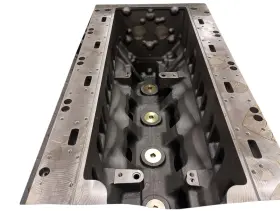
| Brand | MTU |
|---|---|
| Manufacturer Part Number | 23511453 |
| Type | PARTS |
Review MTU Genuine Block New Oem
The MTU 2351:11453 block, also known as a Jumbo Payload Extender (JPE) or a Large Service Frame (LSF), is a specialized data packet used in Ethernet networks for transferring large data frames. This MTU size, which stands for Maximum Transmission Unit, is significantly larger than the standard Ethernet MTU of 1500 bytes.
The MTU 2351:11453 block is specifically designed to accommodate jumbo frames, which can carry up to 9000 bytes of data. These larger frames are particularly useful in high-performance applications, such as data center networking, video streaming, and scientific research, where large amounts of data need to be transmitted efficiently between devices.
The use of jumbo frames can lead to several benefits, including reduced network congestion and increased bandwidth utilization. With smaller frames, overhead from header information can account for a significant portion of the total bandwidth. By increasing the size of the frames, the amount of data that can be transmitted in each packet is increased, resulting in fewer packets being required for the same amount of data. This, in turn, reduces the overall overhead and improves network efficiency.
The MTU 2351:11453 block functions by extending the standard Ethernet Type field, which is used to identify the data contained within the packet. In this case, the extended Type field is set to 0x2351, indicating a jumbo frame. The remaining 11451 bytes of the block can then be used to carry the data.
It is important to note that not all Ethernet networks support jumbo frames or the larger MTU sizes. Network devices, such as switches and routers, must be configured to support jumbo frames in order for them to be transmitted and received correctly. Additionally, some network interfaces may not be able to transmit or receive jumbo frames due to physical limitations, such as cable length or connector specifications.
In summary, the MTU 2351:11453 block is a specialized data packet used in Ethernet networks to transfer large jumbo frames. This MTU size is significantly larger than the standard Ethernet MTU and can lead to increased network efficiency and reduced congestion in high-performance applications. However, it is important to ensure that both the sending and receiving devices support jumbo frames and that the network infrastructure is capable of transmitting and receiving these larger packets.
Buying an MTU (Maximum Transmission Unit) size of 23511453 bytes, also known as Jumbo Frames, can have both advantages and disadvantages for network configurations. Here are some potential pros and cons to consider:
Pros:1. Increased Efficiency: Larger frames reduce the overhead associated with smaller frames, leading to increased network efficiency. This is particularly beneficial for environments that require large data transfers, such as multimedia applications, virtual desktops, and high-performance computing.
2. Reduced Network Congestion: With larger frames, there are fewer frames transmitted over the network, which can help reduce network congestion and improve overall network performance.
3. Improved Response Time: By reducing the number of frames transmitted, larger frames can also lead to improved response time for applications that require rapid data transfer.
Cons:1. Complexity: Implementing Jumbo Frames requires configuring both the switches and end devices to support the larger frames. This can add complexity to network configurations and may require additional resources for management and maintenance.
2. Increased Risk of Error: Larger frames increase the risk of errors during transmission, as there is more data that can be corrupted if a frame is lost or damaged. This can lead to increased network downtime and the need for additional error checking and correction mechanisms.
3. Compatibility Issues: Not all network devices support Jumbo Frames, and those that do may have different maximum frame sizes. This can create compatibility issues and require additional configuration and troubleshooting.
Conclusion:In conclusion, the decision to implement an MTU size of 23511453 bytes (Jumbo Frames) depends on the specific needs and requirements of the network environment. While larger frames offer increased efficiency, reduced network congestion, and improved response time, they also introduce complexity, increased risk of error, and compatibility issues. Careful consideration should be given to the benefits and drawbacks before implementing Jumbo Frames in a network configuration.
Recommendation:If your network environment requires large data transfers and you believe the benefits of Jumbo Frames outweigh the drawbacks, it is recommended to carefully plan and test the implementation to ensure compatibility with all devices and minimize the risk of errors. This may involve performing a network assessment, upgrading network devices to support Jumbo Frames, and implementing error checking and correction mechanisms to mitigate the risk of data loss or corruption.
Details:
Buyer should verify this is the exact part needed before purchasing.
specifications engineblocksam:
- brand: Mtu
- mpn: 23511453
- type: Parts
seller engineblocksam:
- rating: 99.4%
- # reviews: 11941
- city: beaver dam, wi
shipping engineblocksam:
- type: fixed
- service: flat rate freight
- class: freight
returns engineblocksam:
- time: 30 days
- policy: returns accepted
- paid by: buyer
offer engineblocksam:
- best offers: true
- price: $82634.07
- item condition: New
- availability: in stock
- sold #: 19
- in stock #: 1
- options: ship-to-home
- started: may 23, 2025
payments engineblocksam:
- wallet: apple-pay
- credit card: visa
general engineblocksam:
- category: Auto Parts > Car Truck Accessories > Engines > Blocks
Similar Items:
- Mtu 23503597 Genuine Block New Oem Buyer should verify this is the exact part needed before purchasing...(May 23rd, 2025)
