- Car & Truck Engine Blocks Used-New Parts
- sku: 7275917597735772
- TOYOTA 15670-46070
15670-46070 TOYOTA Gte Oil Filter Housing Lexus Supra
fits model: Supra. make: Lexus.
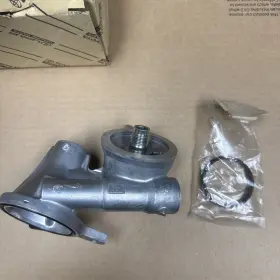
| Brand | TOYOTA |
|---|---|
| Manufacturer Part Number | 15670-46070 |
| Part Type | OIL FILTER HOUSING |
| Material | ALUMINUM |
| Vintage Part | NO |
| Finish | MATTE |
Review TOYOTA Lexus 2jz-ge/ Gte 3.0l Oil Filter Housing for LEXUS SUPRA
Introducing the Toyota 15670-46070 oil filter housing, a crucial component for maintaining the optimal performance of your Toyota Supra, Lexus IS F, or JZA80 series engine powered by the 2JZ-GE or 2JZ-GTE 3.0L 24-valve inline-six engine.
This oil filter housing is meticulously engineered by Toyota to provide reliable and efficient filtration for the engine's oil supply. It is designed to accommodate standard size oil filters and ensures a snug and leak-free fit. The housing is made of high-quality materials, ensuring durability and longevity, even under the most demanding driving conditions.
The Toyota 15670-46070 oil filter housing is a direct OEM (Original Equipment Manufacturer) replacement part, ensuring a perfect fit and function as intended by the vehicle manufacturer. Its sleek and compact design allows for easy installation and access to the oil filter, making routine oil changes a breeze.
The housing's design includes a drain plug located at the bottom, making oil changes a straightforward process. Additionally, the housing features a gasket that ensures a tight seal and prevents oil leaks.
In summary, the Toyota 15670-46070 oil filter housing is an essential upgrade for your Toyota Supra or Lexus IS F with the 2JZ-GE or 2JZ-GTE 3.0L engine. It guarantees reliable filtration, easy installation, and a perfect fit, ensuring your engine performs at its best.
Pros and Cons of Buying a Toyota Supra, Lexus IS F, or JZA80 3.0L Oil Filter Housing (2JZ-GE/GTE)
1. Background:The Toyota Supra, Lexus IS F, and JZA80 3.0L engines share a common 2JZ-GE/GTE platform. Replacing the oil filter housing is a common maintenance task for these vehicles, and the market offers aftermarket and OEM options. In this analysis, we will discuss the pros and cons of purchasing an aftermarket oil filter housing for a Toyota Supra, Lexus IS F, or JZA80 with a 2JZ-GE/GTE engine.
2. Pros of Aftermarket Oil Filter Housings:a. Cost: Aftermarket oil filter housings are generally less expensive than their OEM counterparts.
b. Performance: Some aftermarket housings offer improved fluid flow, which can lead to better engine performance.
c. Customization: Aftermarket housings may offer additional features, such as baffles or different materials, for enhanced filtration and durability.
3. Cons of Aftermarket Oil Filter Housings:a. Quality Concerns: Aftermarket parts may not meet the same quality standards as OEM components, which could result in leaks, poor fitment, or reduced lifespan.
b. Warranty: Aftermarket housings typically do not come with a warranty, unlike OEM parts.
c. Compatibility: Ensure the aftermarket housing is compatible with your specific engine and vehicle model.
4. Pros of OEM Oil Filter Housings:a. Guaranteed Fitment: OEM housings are designed specifically for your vehicle, ensuring a perfect fit.
b. Original Equipment Quality: OEM parts are manufactured to the same standards as the original components, ensuring optimal performance and durability.
c. Warranty: OEM housings usually come with a manufacturer's warranty, providing peace of mind and potential cost savings in the long run.
5. Cons of OEM Oil Filter Housings:a. Cost: OEM oil filter housings are typically more expensive than aftermarket options.
b. Availability: Depending on the vehicle model and availability, it might take longer to source an OEM housing compared to an aftermarket one.
6. Conclusion:When considering purchasing an oil filter housing for a Toyota Supra, Lexus IS F, or JZA80 with a 2JZ-GE/GTE engine, both aftermarket and OEM options have their advantages and disadvantages. Aftermarket housings offer cost savings, potential performance enhancements, and customization opportunities. However, they may not meet the same quality standards as OEM parts and lack a warranty. OEM housings ensure perfect fitment, original equipment quality, and a warranty, but they are more expensive and might take longer to source.
Ultimately, the decision to purchase an aftermarket or OEM oil filter housing depends on your budget, desired performance improvements, and willingness to accept potential trade-offs. If you are looking for cost savings and are confident in the aftermarket part's quality, an aftermarket housing may be the best choice. If you prioritize original equipment quality, peace of mind, and a warranty, an OEM housing is the recommended option.
Details:
specifications engineblocksam:
- for models: Supra
- for makes: Lexus
- brand: Toyota
- mpn: 15670-46070
- part type: Oil Filter Housing
- material: Aluminum
- vintage part: No
- finish: Matte
general engineblocksam:
- category: Auto Parts > Car Truck Accessories > Engines > Blocks
returns engineblocksam:
- paid by: buyer
- time: 30 days
- policy: returns accepted
offer engineblocksam:
- in stock #: 4
- started: november 27, 2025
- options: ship-to-home
- availability: in stock
- sold #: 16
- prices: $41.50–$79.69
- item condition: Used
- best offers: true
payments engineblocksam:
- wallet: paypal
- other
- money order
- credit card: diners-club
shipping engineblocksam:
- service: fedex ground / fedex home delivery
- carrier: fedex
- class: standard
- transit: 5-9 days
- type: fixed
seller engineblocksam:
- # reviews: 172
- city: simi valley, california
- rating: 100.0%
Similar Items:
- Toyota 92 93 94 95 96 97 98 99 1992-2005 Lexus Supra 2jz 3.0l I6 Engine Bare Block The block fits Toyota, lexus, GS3 IS3 SC300 and supra 2JZGE 2j model's, has OE/oem part numbers, for the main bearing cap. This 1992 -2005 Toyota lexus supra 2JZ 3.0L i6 engine bare block is a direct replacement for your vehicles engine. This block is compatible with 1992 -1999 model's part ...(December 31st, 2023)
- Toyota 22r 22re 22-re 22-r 85 86 88 95 Pickup 4runner Celica Oil Pump Spline Drive Gear 79- 85 86 88 - 95 Toyota pickup 4RUNNER Celia 20R 22R 22RE oil pump spline drive gear...(January 6th, 2024)
- Toyota 1221536010 Engine Oil Separator From 2013 Rav4 2.5 Please replace such items as required for proper installation...(January 9th, 2024)
- Toyota 11401-49678 2jzgte Cylinder Block Aristo Supra Vvti Engine Motor 11401-4967 Freight Toyota part number: 11401-49678. Shipping: shipping cost: see listing for shipping costs. Toyota Ariosto, JZS161 1998 -2005 2JZ-GTE. Shipping on this item. Prices vary depending on item and destination. Engine was broken apart to be sold as individual parts. Fits: Toyota supra, JZA80 1998 -2002 ...(January 15th, 2024)
- Toyota 122150v010 Engine Oil Separator From 2010 Camry 2.5 Please replace such items as required for proper installation...(January 24th, 2024)
- Toyota 1ur-fe Lexus 4.6 1ur V8 Dohc Mpi Short Block All engine parts should be inspected upon receipt. Cylinder heads: heads are checked with a vacuum pump for compression and leaks. Engine blocks: blocks are checked for cracks and damage. Engine information. No core fees. Pistons: pistons are checked for damage, warping, or seizing of the pin. No ...(February 15th, 2024)
- Toyota 11401-49575 Supra Factory Engine Block Bare Turbo 7mgte 7m-gte Standard Bore 83mm For parts or rebuild. The measured bore of the cylinder walls is approx 83MM or stock. The block, cylinder walls, and main caps appear to be in usable rebuild able condition. Toyota factory used 7M-GTE turbo. It appears to unmodified. No other testing or measuring has been performed...(February 28th, 2024)
- Toyota Lexus 82620-33070 2012-2018 Genuine And Models Block Assembly Fusible Please verify fitment by the part number provided. Ready for a fast shipping. Please examine all pictures carefully, especially close up. Good, used condition. No structural damage. The shipping price is for 48 continuous states. There is a picture with part number. The item might have some light ...(March 1st, 2024)
- Toyota 25706-43050 1983-1984 Celica Supra 5mge Intake Vacuum Hard Line Pipe Tubing I may have it but not listed yet. Cross reference states 08/1982 to 08/1984, but makes sure yours matches as there are different variations based on emissions. Intake manifold mounted vacuum lines removed from a 1983 Celia supra with 5MGE. If you don't see a part listed that are looking for, feel ...(March 3rd, 2024)
- Toyota 25706-43021 1982 Celica Supra 5mge Intake Manifold Vacuum Hard Line Pipe Tubing Intake manifold mounted vacuum lines removed from a 1982 Celia supra with 5MGE. Cross reference states 08/1981 to 08/ 1982 , but makes sure yours matches as there are different variations based on emissions. If you don't see a part listed that are looking for, feel free to contact me. I may have ...(March 4th, 2024)
- Lexus 19000-f0010 2018-2023 Toyota Camry 2.5l Engine Motor Long Block 39k Miles W o Hybrid ...(March 7th, 2024)
